

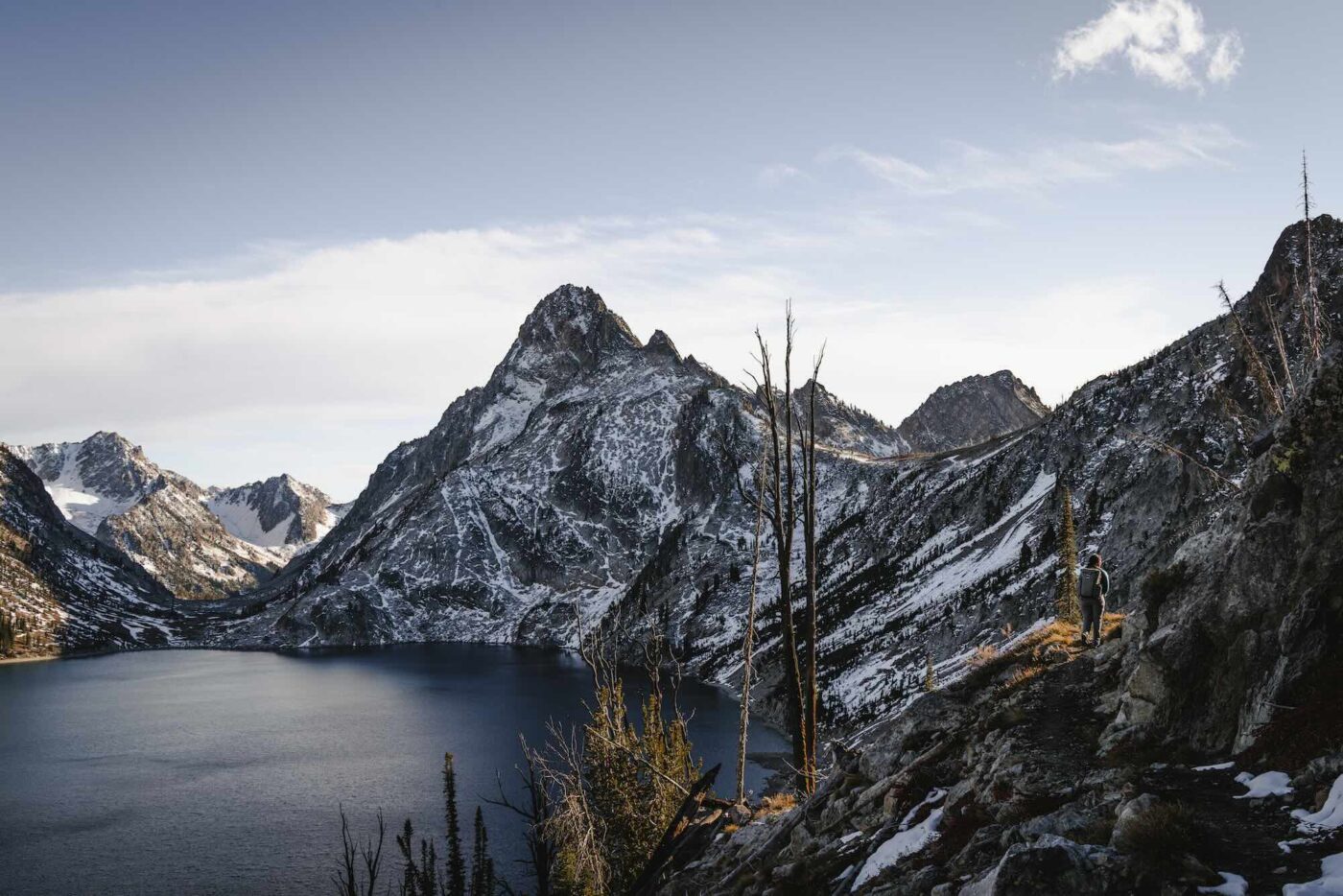
This blog post was first thought up on a giant backpacking day hike that ended with us arriving back at the van deep into the dark of night.
I was just imagining all the things I thought someone would need to be able to go out for a long day hike or a multi-day and still be able to get the most stellar images possible. So here is that list I put together back in October of 2022 in the Sawtooth Mountains. A backcountry essential equipment items list!
This post contains affiliate links. As an Amazon Associate, we earn from qualifying purchases. If you buy through one of our links, we may earn a small commission at no extra cost to you. Read our full disclosure policy.
Power is Everything
If you don’t have enough power to keep your camera, phone, or headlamp charged, you’ll be pretty much out of luck.
Get yourself a “just right for you” battery pack. If you know that you’ll only need to recharge maybe a battery or just one more top up on your phone, then you can get away with a 20,000 mah battery pack. It’s not too heavy and it can absolutely charge all the things for a one or two day trip out.
However, if you plan on being in nature a bit longer, you may want to consider something with solar, paired with a battery brick. This way, you can either attach it to your pack and collect power in motion, or leave it back at camp while you’re out there shooting away from basecamp.
Either one you choose, it will certainly add some weight to your pack. Yet, you will be so thankful you had that energy off grid when a camera battery dies and you need it for that one shot!
Light for Night
If you’re staying out past sunset or overnight, you’ll definitely need a light source, whether it’s a flashlight or a headlamp.
For photography, though, a headlamp with a red light setting is essential.
Our eyes take 20-40 minutes to adjust to the dark, using a chemical called rhodopsin, but bright lights can instantly reset this process. A dim red light helps you see clearly at night without ruining your night vision, making it perfect for stargazing or capturing those late-night shots.

Extra, Extra Batteries
This point is different from the first. Extra camera batteries ensure you have enough power for photos or footage without needing to recharge constantly.
However, if you’re heading to a remote area for several days, carrying too many batteries can add unnecessary weight. It’s important to balance your battery needs based on how much you’ll be shooting.
Whether it’s a large production or a personal shoot, plan accordingly to bring just the right amount.
Gloves With Touchscreen Finger Capabilities
While shooting in the cold of the backcountry, whether that’s during the day or night, keeping your hands warm is crucial.
However, so is being able to adjust your camera settings or use your phone without removing your gloves.
Warm gloves with touchscreen-compatible fingertips allow you to do both, keeping your hands protected from the elements while maintaining full control over your gear.
Whether you’re adjusting camera settings, swiping through images, or navigating the trails on your phone’s offline map app, these type of gloves are a game-changer for cold-weather backcountry photography.
Lightweight Tripod
A sturdy yet lightweight tripod is essential for backcountry photography, where every ounce counts.
Carbon fiber tripods are the go-to choice—they offer durability and stability while remaining incredibly lightweight.
However, many can’t either afford them or want to allocate their funds to them. That’s why we chose this light yet travel and backpacking-friendly tripod, the aluminum version of the tripod linked above.
Therefore, look for a tripod that fits your budget, folds down compactly, and doesn’t take up too much space. I thoroughly prefer a quickly deploying tripod that has leg locks and is adjustable to a height that can reach my eyes.
Being able to have a light, fast, and easy-to-use tripod allows you to capture steady shots without missing the moment.
Whether you’re shooting long exposures, time-lapses, yourself, or low-light scenes, a lightweight tripod ensures sharp, professional results without weighing you down.

Camera Backpack
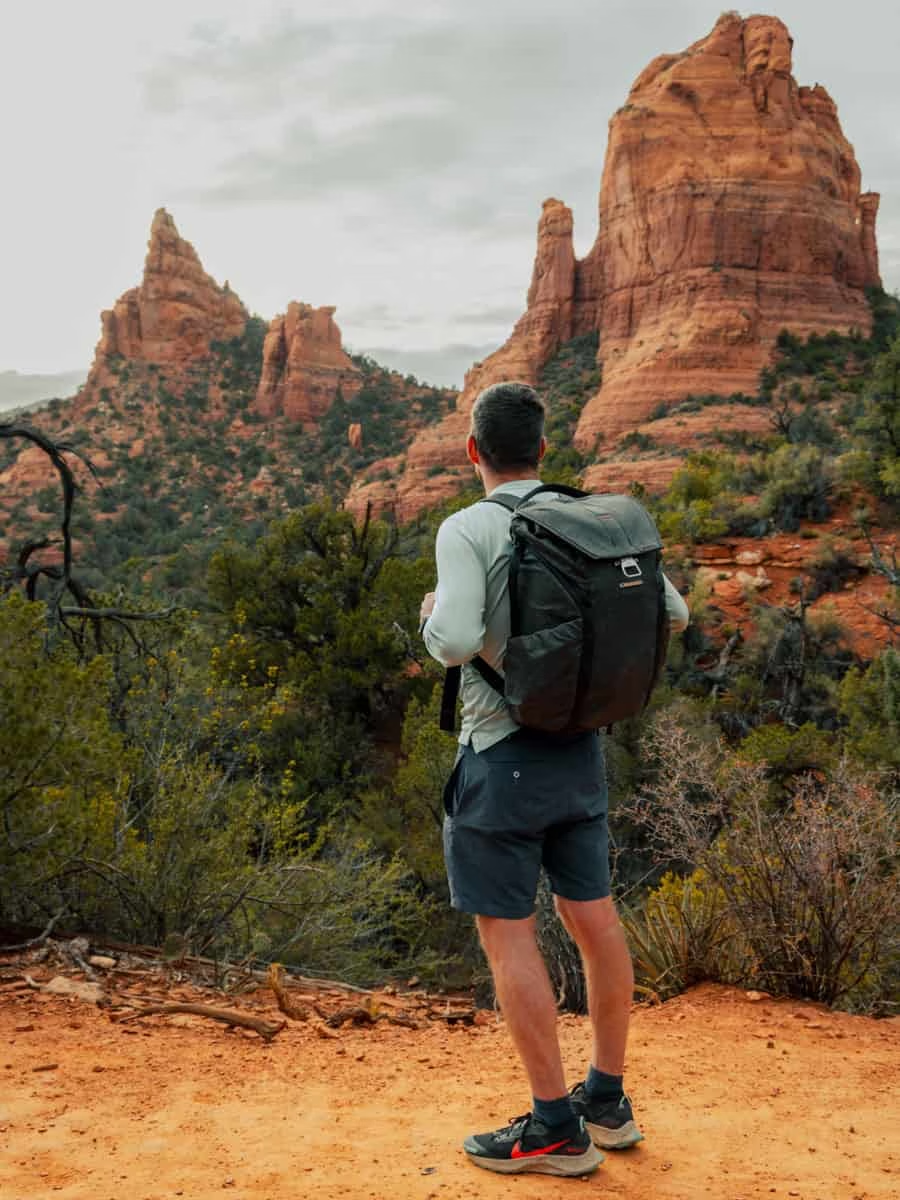
A well-designed backpack is crucial for carrying both your camera gear and backcountry essentials comfortably. Camera gear adds up in weight.
Remember every ounce counts?
Peak Design backpacks stand out as some of the best options for outdoor photographers, especially their newest addition to their product line, The Outdoor Backpack.
These kinds of backcountry rugged backpacks that can double for backpacking and photography offer a perfect balance of durability, organization, and accessibility.
With modular dividers, you can customize compartments to fit your camera body, lenses, and accessories securely.
While keeping everything easily reachable. Their ergonomic design ensures weight is evenly distributed, reducing strain during long hikes.
In addition, features like weather-resistant materials, hidden zippers, and quick-access side panels make them ideal for backcountry adventures.
Multiple Lenses
You may be an experienced photographer or a zealot for one lens and know exactly how and why you only use that one lens.
However, most people aren’t quite sure what they will need when they get in the backcountry. Obviously, only bringing along one lens is less weight and better for your back.
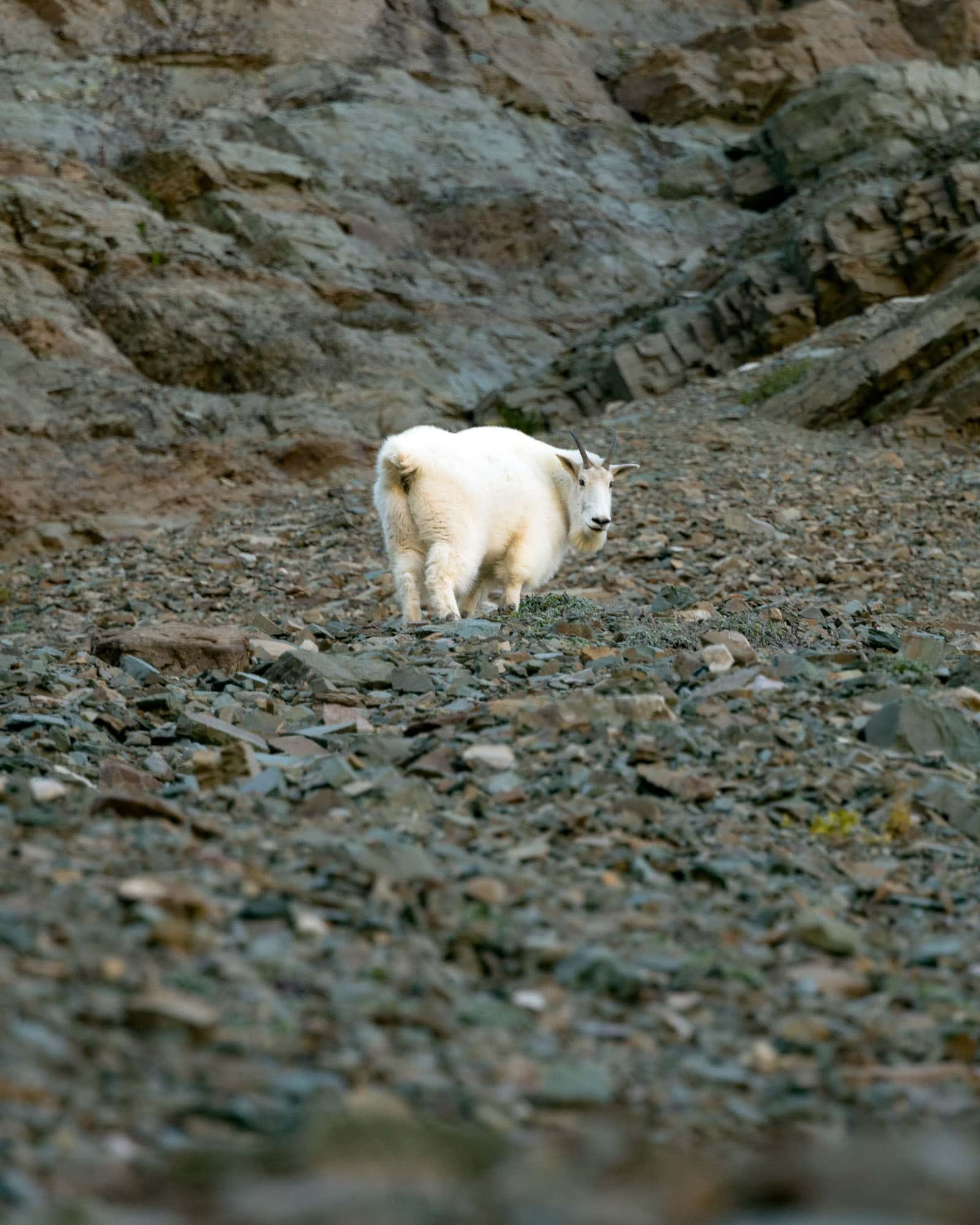
Yet, by bringing a couple different lenses, you will have the ability to take a wide expansive photo of the landscape in front of you. If you have that zoom lens, you can punch in deep to photograph that mountain goat!
ND Circular Polarizer
I have already written a little bit about the uses and benefits of an ND circuluar polarizer in particular to the GoPro.
The same benefits do apply here as well in relation to a full frame or crop sensor camera.
An ND circular polarizer is a must-have tool for backcountry photography, combining the benefits of a neutral density (ND) filter and a circular polarizer. Here’s why it’s an essential piece for your backcountry kit:
- Reduces Glare & Reflections – Helps cut down reflections from water, glass, and other shiny surfaces, making skies a deeper and richer color.
- Enhances Contrast & Color – Improves saturation and contrast in landscapes, making foliage greener and skies more vibrant.
- Controls Exposure in Bright Conditions – The ND component reduces how much light is entering the camera’s sensor, allowing for slower shutter speeds, even in daylight—perfect for smoothing water or capturing motion blur. Or being able to hit that 2x your shutter speed rule in videography.
- Eliminates the Need for Stacking Filters – Saves space and weight in your pack by combining two essential filters into one, reducing bulk and keeping things simple and efficient.
- Perfect for Backcountry Shooting – Lightweight, easy to use, and highly versatile for changing light conditions in remote locations.
Whether you’re photographing rivers, mountains, or vast landscapes, an ND circular polarizer helps you capture stunning, well-balanced images straight out of the camera.
Be mindful not to overuse or rely too heavily on the filter. In my experience, it can sometimes make skies appear overly deep blue, which may not always be the desired look.
If this happens, adjusting it in post-processing can be challenging, so it’s best to use the filter carefully to achieve a natural balance.

All The Peak Design Goodies
**Full disclosure, this isn’t a sponsored post for Peak Design. These are our genuine opinions of Peak Design and how much we love and use their products**
Peak Design makes some of the best travel and photography accessories, combining smart design with durability. Especially out on a backcountry expedition.
One of the main reasons for choosing a company like Peak Design is that they create a product to seamlessly integrate with every other product in their lineup. Which is great for practicality, saving space, and weight!
Even if peak design isn’t right for you, find a company that integrates all their product for the same reason I mentioned previously.
Here are my favorite essentials that I literally use on a daily basis:
Everyday Backpack
A versatile, weatherproof bag designed for photographers, travelers, and times out in the backcountry. With customizable dividers, easy access, and expandable storage, it’s perfect for carrying cameras, lenses, and every essential.
Capture Clip
This game-changer securely mounts your camera to a backpack strap or belt, keeping it instantly accessible while hiking or exploring. Giving you the ability to free up your hands in those moments of scrambling or to give your arm a break.
Slide Camera Strap
Comfortable, quick-adjusting, and versatile, this strap lets you wear your camera as a sling, neck, or shoulder strap. Smooth on one side for sliding, grippy on the other for keeping it in place.
Clutch Hand Strap
Ideal for handheld shooting, this low-profile strap gives a secure grip without restricting movement. I always feel safe slinging the camera around while my hand is securely in place. All thanks to the hand strap.
Great for those who want extra control without a full strap setup.
Travel Tripod
Ultra-compact, lightweight, and quick to deploy, this tripod is perfect for travel photographers. Despite it being the size of a 40oz stainless steel water bottle, it’s sturdy enough for long exposure, time-lapses, and landscape shots.
Mobile Phone Case & Mounts
A sleek, protective case with built-in SlimLink™ magnetic mounting, making it effortless to attach to Peak Design’s mounts for your bike, car, or tripod.
Peak Design’s gear is built for adventure—versatile, durable, and designed to make photography on the move seamless.
In Conclusion
Whether you’re heading out for a long day hike or a multi-day backcountry expedition, having the right gear can make all the difference.
From keeping your camera powered and protected to ensuring stability with a lightweight tripod, each piece of equipment serves its purpose.
Investing in quality gear, like Peak Design’s innovative accessories, helps streamline your workflow, reduces hassle, and allows you to focus on capturing stunning images.
Ultimately, the best gear is the kind that lets you stay in the moment and capture incredible shots effortlessly.
Looking to upgrade your backcountry photography setup? Subscribe to our newsletter for exclusive gear tips, expert reviews, and adventure stories. Plus, tag us on social media with your backcountry shots—we’d love to see your work!