

ArboursAbroad contains affiliate links. As an Amazon Associate, we earn from qualifying purchases. If you purchase using one of the affiliated links, we may receive compensation at no extra cost to you. See our Disclosure Policy for more information.
Insulating a campervan is a super important step in any van build. It not only helps you stay warm in the cooler months, but it also helps keep you and all your belongings cool in the hotter temperatures. You have to remember though… your insulation is only as strong as the weakest area. Meaning, you truly need to insulate all areas of your campervan conversion.
When reading about insulation, you often see the words, “R-value”. This is simply how well the material insulates per square inch. Havelock Sheep Wool is a fantastic price for its high R-value, and is also moisture-wicking, meaning you don’t have to worry about mold. And even better, it’s environmentally friendly too! We couldn’t get our hands on it fast enough, so we went with Polyiso foam board insulation. It’s the next best thing for the price to R-value ratio and was available to us locally.
In the walls and the ceiling, we used 1-inch polyiso foam board insulation as space allowed for that thickness. However, on the floor, we used 1/2 inch polyiso, since we couldn’t even spare another 1/2 inch of space inside the van with how small it is!
In a future van build, we’d like to use Havelock Wool insulation, as it would be much easier to work with and fill into the wall cavities of the campervan. However, we’d still use polyiso foam board insulation for the floor and ceiling. The only thing we would do differently is to use a thicker foam board if space allows, just to add a higher R value per inch.


Campervan Insulation for Our Minivan Camper Conversion

Great Stuff Expanding Foam (8-10 bottles total)
1/2 inch Polyiso Foam Board Insulation (2 sheets)
1 inch Polyiso Foam Board Insulation (2 sheets)
Reflectix (enough for wheel wells and windows)
3M Aluminum Foil Tape (1 roll)
A Closer Look at Our Campervan Insulation
Great Stuff Expanding Foam (8-10 bottles total) | check current prices here
Great Stuff Spray Foam works wonders when insulating a campervan. It’s perfect to squeeze in cracks and ribs throughout the van that you can’t access except through a tiny hole! We also used expanding spray foam insulation to fill in the connecting bits of polyiso foam boards and around the perimeter or every piece of rigid foam board insulation.
It also works as a really good glue when laying foam board insulation on the floor, ceiling, and sticking it to the walls!
The spray foam cans can and will get super messy, so these bottles are perfect because you can cap off the spray nozzle, so it doesn’t keep expanding and spraying even when finished. We used about 8-10 bottles of this spray foam for our minivan camper conversion. With that said, we had a lot of window frames and ribs to fill in that most traditional vans used for van builds don’t have.
1/2 inch Polyiso Foam Board Insulation (2 sheets for floor) | find it here
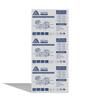
Foam board insulation is a great way to insulate a campervan. The boards are rather cheap for the high R-value they offer. In fact, their R-value is much better per inch than many other expensive, trendy van insulations, like Thinsulate.
In our minivan campervan conversion, we used 1/2 inch polyiso foam board insulation for the floor of the van. This was because we didn’t have any extra space to give. While this works for insulation, if we had more room, we would have used 1 inch insulation instead.
We secured the polyiso boards to the floorboard of the van with beads of Great Stuff Expanding Foam in each of the floor ribs.
1 inch Polyiso Foam Board Insulation (2 sheets for walls and ceiling) | find it here
1 inch polyiso foam board insulation is the perfect insulation for a budget campervan build. It’s also super nice for the fact that you can find it at most hardware stores! We used 1 inch polyiso foam board insulation for the walls and ceiling of our minivan campervan conversion. This has worked really well in the cold weather, and we expect it to work well in the heat too.
To secure the foam boards to the ceiling and the walls, we use Great Stuff Expanding Foam. This works as insulation around the perimeter of the polyiso sheets and also as a glue to secure the polyiso to the walls.
In our Toyota Previa minivan, we used about one and a half sheets of Polyiso foam board. With that said, we kept all our windows exposed, so we didn’t insulate that part of the van with polyiso. Had we done that, we would have needed at least two full boards, if not two full sheets plus a little extra!
Reflectix (wheel wells and windows) | current prices here
Reflectix works as a radiant heat barrier. Meaning the heat (and cold) need to hit the Reflectix and then bounce off it. With that said, covering Reflectix with any material defeats the purpose of using it as good insulation, since covering it does not allow it to reflect radiant heat. Covering insulation that’s made to reflect radiant heat lowers the R-value to basically nothing.
In our minivan campervan conversion, Reflectix plays a huge role in our insulation. We decided to keep all the windows exposed and open, so in the cold and in the heat, we put up our custom made Reflectix window covers to insulate the van.
We also used Reflectix around the wheel wells due to the wonky shape of the wheel well. While this isn’t the best van insulation material to use, there is a bit of an air gap around the wheels, so it’s better than nothing there! Not to mention, very easy to work with for the awkward shape of the wheel wells.
3M Aluminum Foil Tape (1 roll) | current prices here
Aluminum foil tape is the go to tape for insulating your van conversion. It’s a bit annoying to work with, as it folds on itself super easy, however, it’s the perfect tape for insulating your wheel wells. We also used aluminum foil tape to cover any connecting pieces of polyiso foam board insulation.
And lastly, we used it around the entire perimeter of the van floor insulation. In our heads, this works better for a water seal than caulking because it won’t get moldy (like our cheap caulking in our first van did). It may not be necessary, but we felt better about taping off the perimeter.
Our Campervan Insulation in Photos


More Details on Insulating a Campervan
Camper Van Floor Insulation Materials and Step by Step Guide (with pictures and video)
More Details on Van Builds
Our Complete Toyota Previa Minivan Campervan Conversion
31 Steps to Mounting Flexible Solar Panels to Your Van Roof
Campervan Gadgets | the best on the market, but please don’t get them all
Van Life Apps and Websites that are EXTREMELY Helpful on the Road
Vanlife Toilets | yes.. all the ins and outs of pooping on the road
Choosing the Best Placement and Stove for Your Specific Van Build
Save and Share This Post Here
Did you like this post on campervan insulation? It truly helps us tremendously when you save and share our posts with others! It’s a great way to show this post was helpful and we should write more like it in the future. Use these pictures to pin this post on Pinterest! Want to support us in a different way? Find out how here.